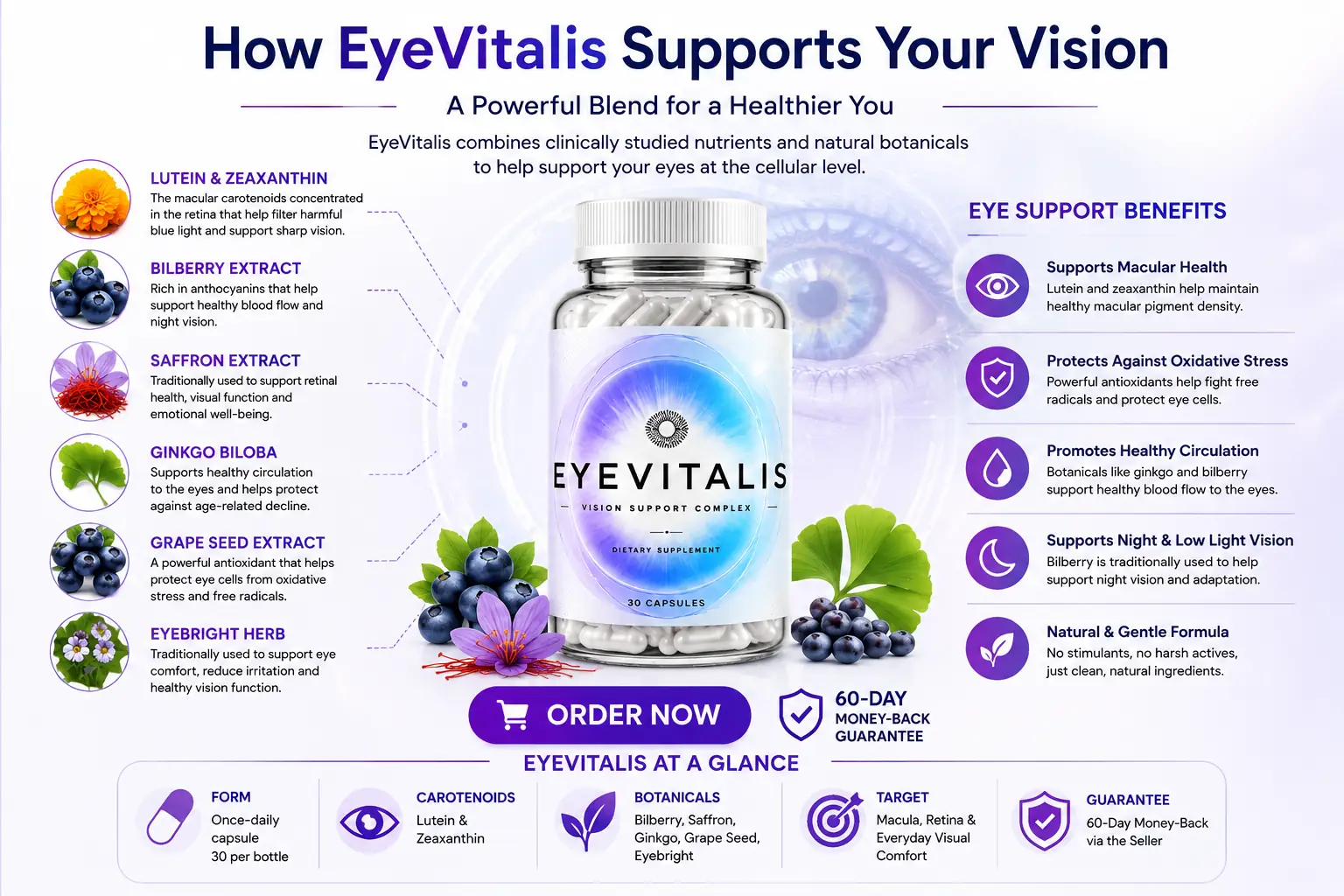
Lutein and zeaxanthin are the anchor ingredients in EyeVitalis — the reason the product is positioned as "macular carotenoid-first" rather than built around a long list of token-dose botanicals.
At a Glance
- Ingredient type
- Macular Carotenoids
- Also in this group
- These two are the only carotenoids in the formula
- Primary role
- Macular pigment density and sharp central vision support
- Common sources
- Marigold flowers (supplement form); kale, spinach, corn and egg yolks (dietary)
- Known interactions
- None commonly flagged — see ginkgo biloba for the formula's interaction note
What They Are
Lutein and zeaxanthin are two carotenoids — natural plant pigments in the same broad family as beta-carotene. What makes them distinctive is where they end up in the body: they concentrate in the macula, the small central region of the retina responsible for sharp, detailed central vision. That concentration is measurable, and it's usually described as macular pigment density.
They're closely related compounds with slightly different molecular structures, which is why they're almost always discussed and supplemented as a pair rather than individually.
Where They Come From
In the diet, lutein and zeaxanthin come from leafy greens like kale and spinach, plus corn, egg yolks, and other yellow-orange produce. In supplement form, they're most commonly extracted from marigold flowers.
Worth being plain about: a supplement is intended to complement a balanced diet, not replace it. If you already eat a lot of leafy greens, you're already getting some of these carotenoids.
Role in EyeVitalis
These two carotenoids are the formula's starting point. They're commonly discussed for their role in filtering harmful blue light and supporting healthy macular pigment density — which is why they're the ingredients EyeVitalis leads with, and the reason the other five ingredients are framed as supporting botanicals rather than co-anchors.
This matters most for adults who read or drive often, or who spend long stretches on screens — the situations where sharp central vision does the most work.
Traditional Use & Research
Of the six ingredients in EyeVitalis, lutein and zeaxanthin are the ones most frequently raised in a clinical setting — many people first hear about them from their own eye doctor rather than from a supplement label. They have been individually studied to varying degrees.
The honest caveat applies here as it does everywhere on this site: ingredient-level research is not the same as research on the complete finished EyeVitalis formulation, and it should not be interpreted as proof that this product produces a specific result.
Read the Independent Sources
- Age-Related Eye Disease Studies (AREDS/AREDS2) — National Eye Institute (NIH)
- Diet, Nutrition, and Eye Health Supplements — American Academy of Ophthalmology
AREDS2 is the large NIH trial that added lutein and zeaxanthin to the earlier AREDS formulation. It studied a specific formulation at specific doses — not EyeVitalis — so read it as background on these carotenoids, not as evidence about this product.
How They Work With the Others
No single ingredient in EyeVitalis is presented as a stand-alone solution. Lutein and zeaxanthin cover the macular role; bilberry and ginkgo cover circulation; grape seed covers antioxidant protection; saffron and eyebright cover comfort and visual function. Six complementary roles, not one ingredient doing all the work.
Who Should Be Cautious
Lutein and zeaxanthin are not commonly flagged for medication interactions, but the finished EyeVitalis formula does contain ginkgo biloba, which may interact with blood-thinning medication. Consult a healthcare professional before use if you take blood thinners, are pregnant, nursing, or manage a medical condition. EyeVitalis is not intended for anyone under 18.
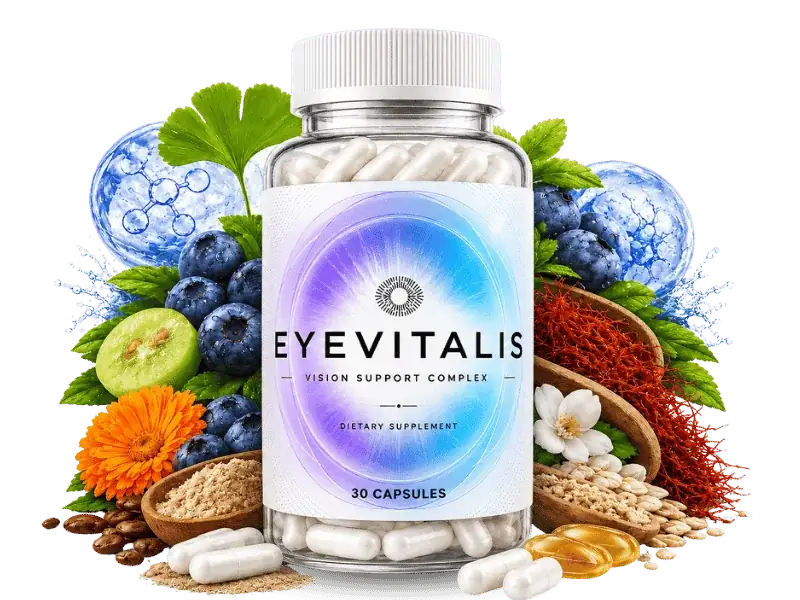
Carotenoid-First, Fully Disclosed
A once-daily capsule built around lutein and zeaxanthin, backed by a 60-day money-back guarantee.
Get EyeVitalis Now