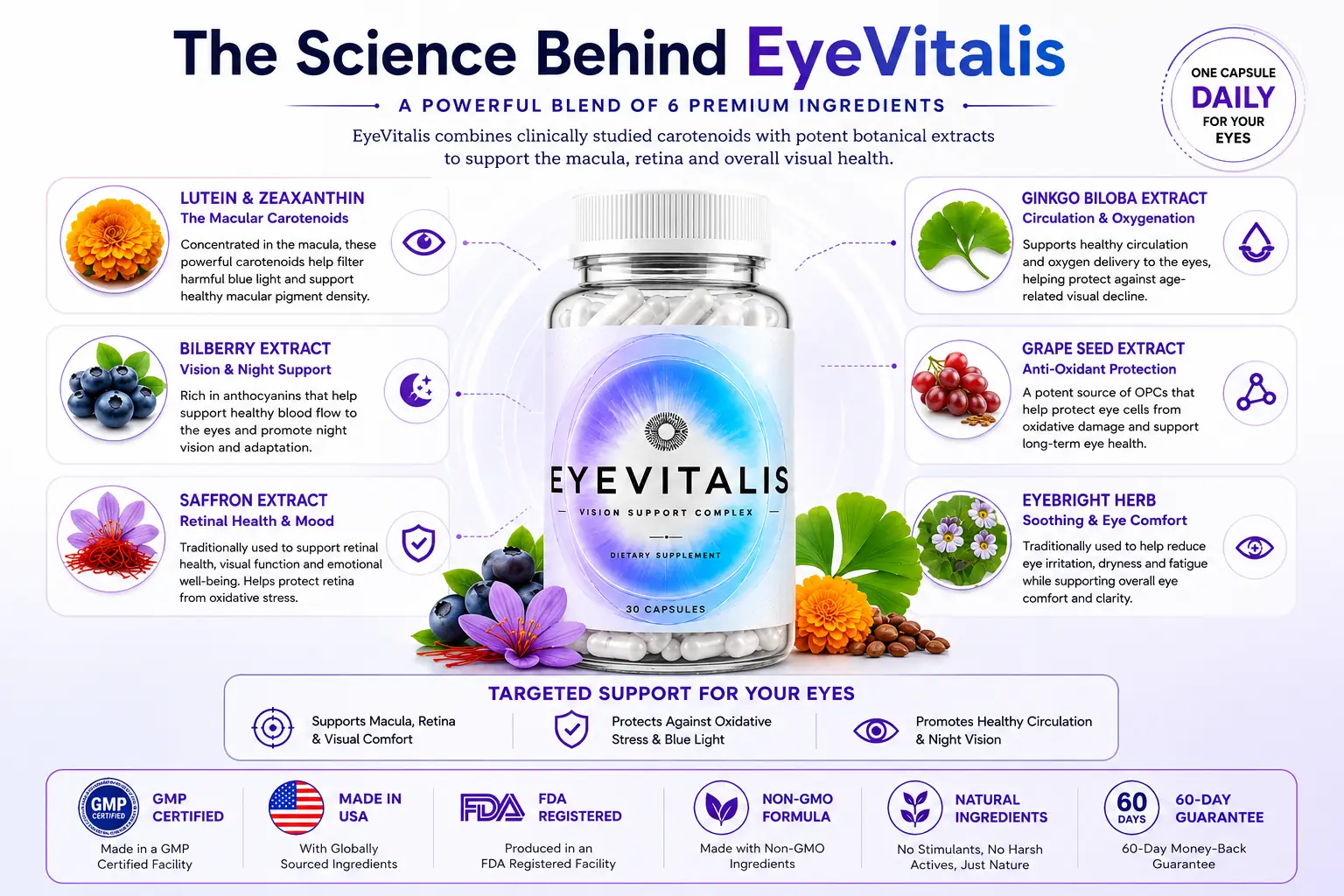
Bilberry is one of two circulation-focused botanicals in EyeVitalis, paired with ginkgo biloba. It's also the ingredient most often associated with night vision support.
At a Glance
- Ingredient type
- Circulation Support
- Also in this group
- Ginkgo Biloba
- Primary role
- Healthy blood flow to the eyes; night vision and low-light adaptation support
- Key compounds
- Anthocyanins — the deep blue-purple plant pigments
- Known interactions
- Talk to a doctor if you take blood thinners; the formula also contains ginkgo
What It Is
Bilberry is a small, dark berry that's rich in anthocyanins — plant compounds traditionally associated with supporting healthy blood flow to the eyes. It's a close relative of the blueberry, though not the same plant: bilberry flesh is dark all the way through rather than pale under the skin.
Its use in eye-health formulas has a long traditional history, which is why it turns up in so many vision-support products.
Where It Comes From
Bilberry (Vaccinium myrtillus) grows wild across northern Europe. In supplement form it's used as a concentrated extract standardized for its anthocyanin content, rather than as whole dried fruit.
Role in EyeVitalis
Bilberry covers two of the benefits EyeVitalis is designed to support: healthy circulation to the eyes, and night vision. The anthocyanins are the reason it's included — the same compounds that give the berry its color are the ones traditionally discussed in a vision context.
It's paired with ginkgo rather than duplicated by it. The two are grouped together as the formula's circulatory botanicals, but bilberry carries the night-vision and low-light association that ginkgo doesn't.
Traditional Use & Research
Bilberry has a long history of traditional use in eye-health preparations and has been individually studied to varying degrees. As with every ingredient here, that ingredient-level history is different from research on the complete finished EyeVitalis formulation, and shouldn't be read as proof that this product produces a specific result.
Read the Independent Source
- Bilberry: Usefulness and Safety — NIH National Center for Complementary and Integrative Health
NCCIH is a non-commercial NIH centre that publishes plain-language summaries of what the evidence does and doesn't show for botanicals. We'd rather you check their write-up than rely only on ours.
How It Works With the Others
Bilberry sits in the circulation group with ginkgo biloba. Around them, lutein and zeaxanthin anchor the macular role, grape seed extract handles antioxidant protection, and saffron and eyebright cover comfort and visual function.
Who Should Be Cautious
EyeVitalis contains ginkgo biloba, which may interact with blood-thinning medication. Consult a healthcare professional before use if you take blood thinners, are pregnant, nursing, or manage a medical condition. EyeVitalis is not intended for anyone under 18. Always review the current product label before purchase.
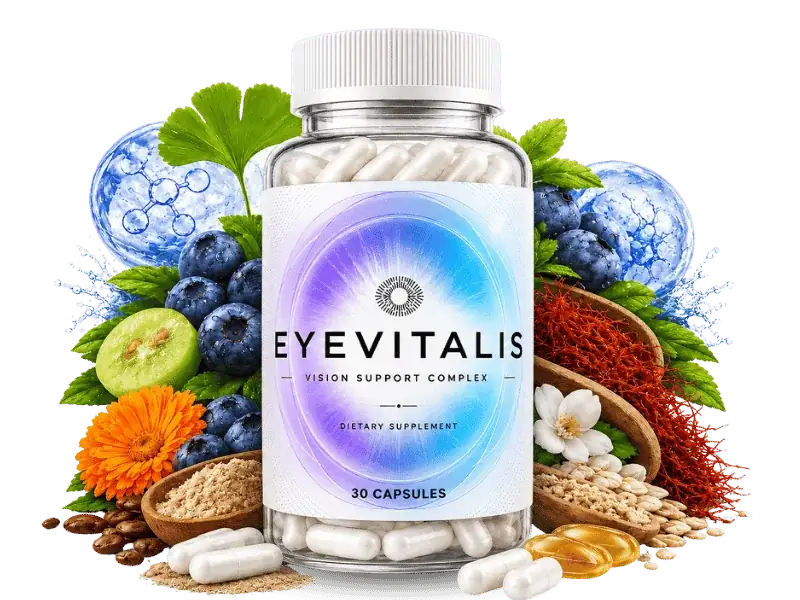
Ready to Try EyeVitalis?
A once-daily, transparent 6-ingredient capsule backed by a 60-day money-back guarantee.
Get EyeVitalis Now