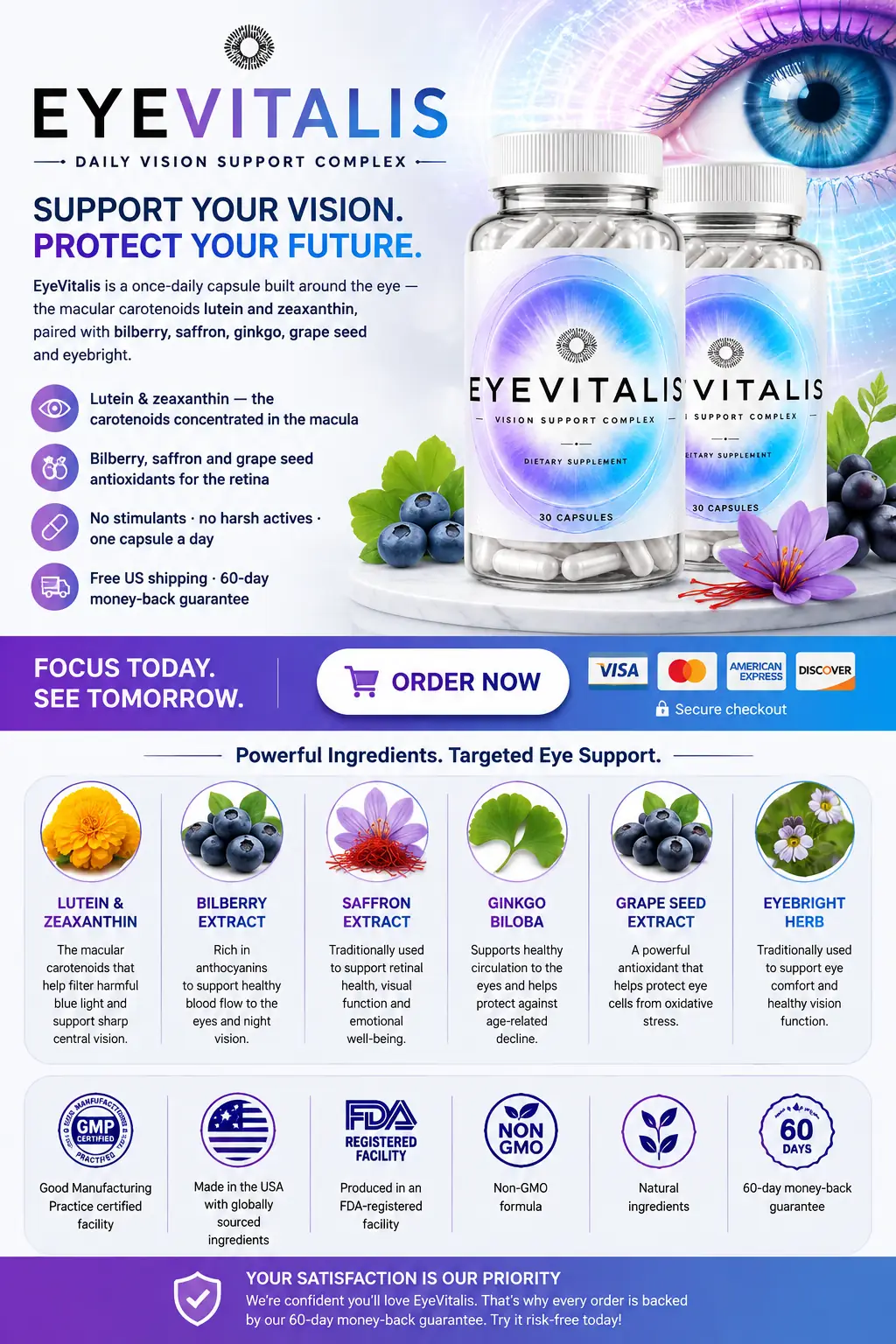
Saffron is one of two comfort-and-function botanicals in EyeVitalis, alongside eyebright. It's also the formula's most unusual inclusion — most vision supplements don't carry it.
At a Glance
- Ingredient type
- Comfort & Function
- Also in this group
- Eyebright Herb
- Primary role
- Retinal health and visual function support
- Source
- Stigmas of the saffron crocus flower (Crocus sativus)
- Known interactions
- None commonly flagged — but the formula contains ginkgo biloba
What It Is
Saffron is traditionally used to support retinal health, visual function, and emotional well-being. It's derived from the saffron crocus flower — specifically the thread-like stigmas at the centre of each bloom, which have to be harvested by hand. That's why saffron is one of the more expensive botanicals by weight in any formula.
Where It Comes From
Culinary saffron and supplement saffron come from the same plant, but they're not the same preparation: supplement form is a concentrated, standardized extract rather than the whole dried threads you'd cook with.
Role in EyeVitalis
Saffron is included specifically for its traditional retinal-support role — a different pathway from the macular pigment role that lutein and zeaxanthin cover, and from the circulation work that bilberry and ginkgo do.
Its traditional association with emotional well-being is part of its history as a botanical, but EyeVitalis is a vision-support supplement and makes no claim to treat any mood or medical condition.
Traditional Use & Research
Saffron has a long history of traditional use and has been individually studied to varying degrees. As with every ingredient on this site: ingredient-level research is different from research on the complete finished EyeVitalis formulation, and it isn't proof that this product produces a specific result.
Further Reading
- Herbs at a Glance — NIH National Center for Complementary and Integrative Health
- Using Dietary Supplements Wisely — NIH NCCIH
Worth stating plainly: NCCIH does not currently publish a saffron-specific fact sheet the way it does for ginkgo, bilberry and grape seed. That means the independent evidence base for saffron is thinner than for those three, and the links above are general guidance rather than a review of this specific botanical.
How It Works With the Others
Saffron pairs with eyebright in the comfort-and-function group, alongside the macular carotenoids (lutein and zeaxanthin), the circulation pair (bilberry, ginkgo), and the antioxidant (grape seed extract).
Who Should Be Cautious
Saffron is not commonly flagged for medication interactions at supplement levels, but the finished EyeVitalis formula contains ginkgo biloba, which may interact with blood-thinning medication. Consult a healthcare professional before use if you take blood thinners, are pregnant, nursing, or manage a medical condition. Do not exceed the recommended dose of one capsule daily.
Ready to Try EyeVitalis?
A once-daily, transparent 6-ingredient capsule backed by a 60-day money-back guarantee.
Get EyeVitalis Now