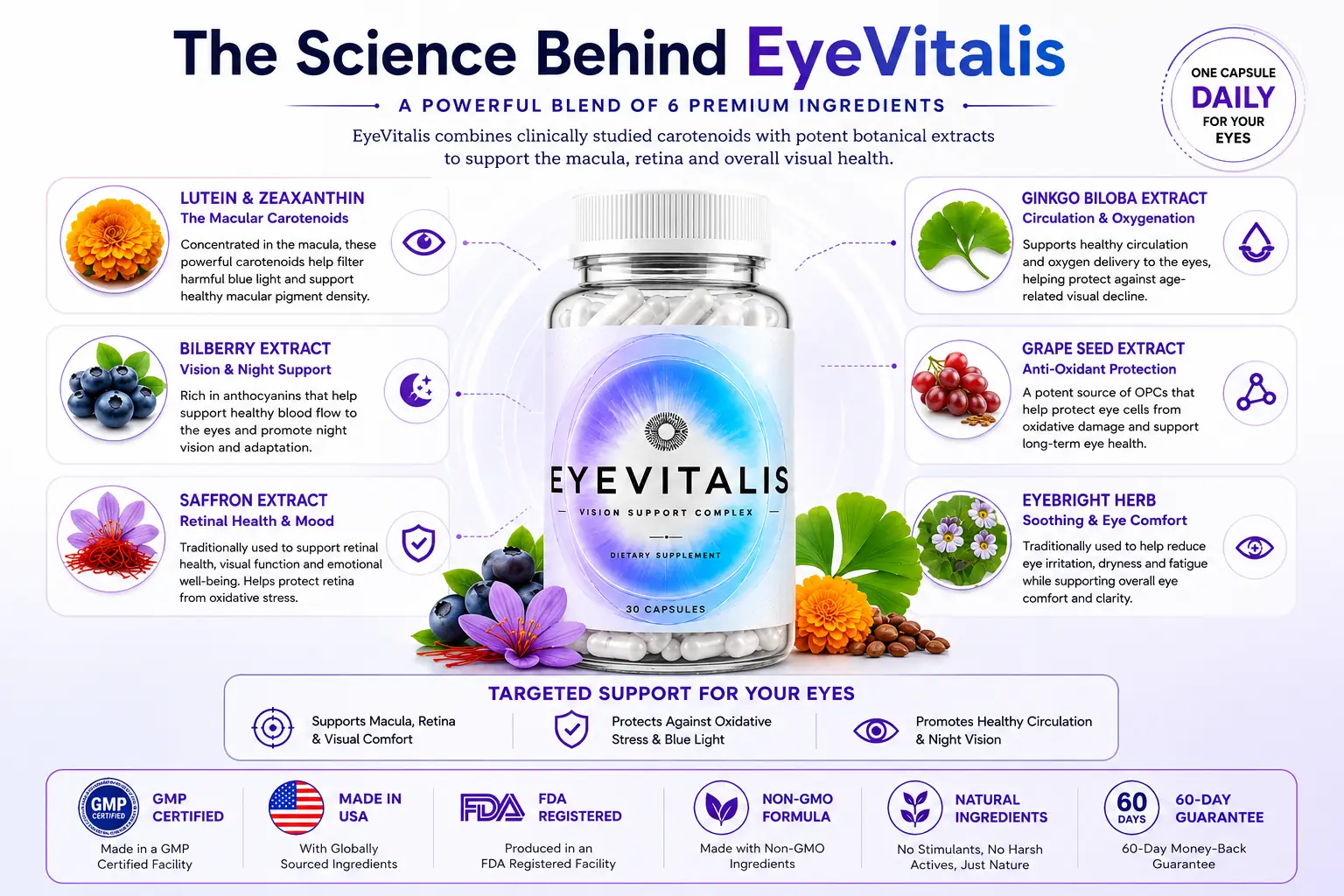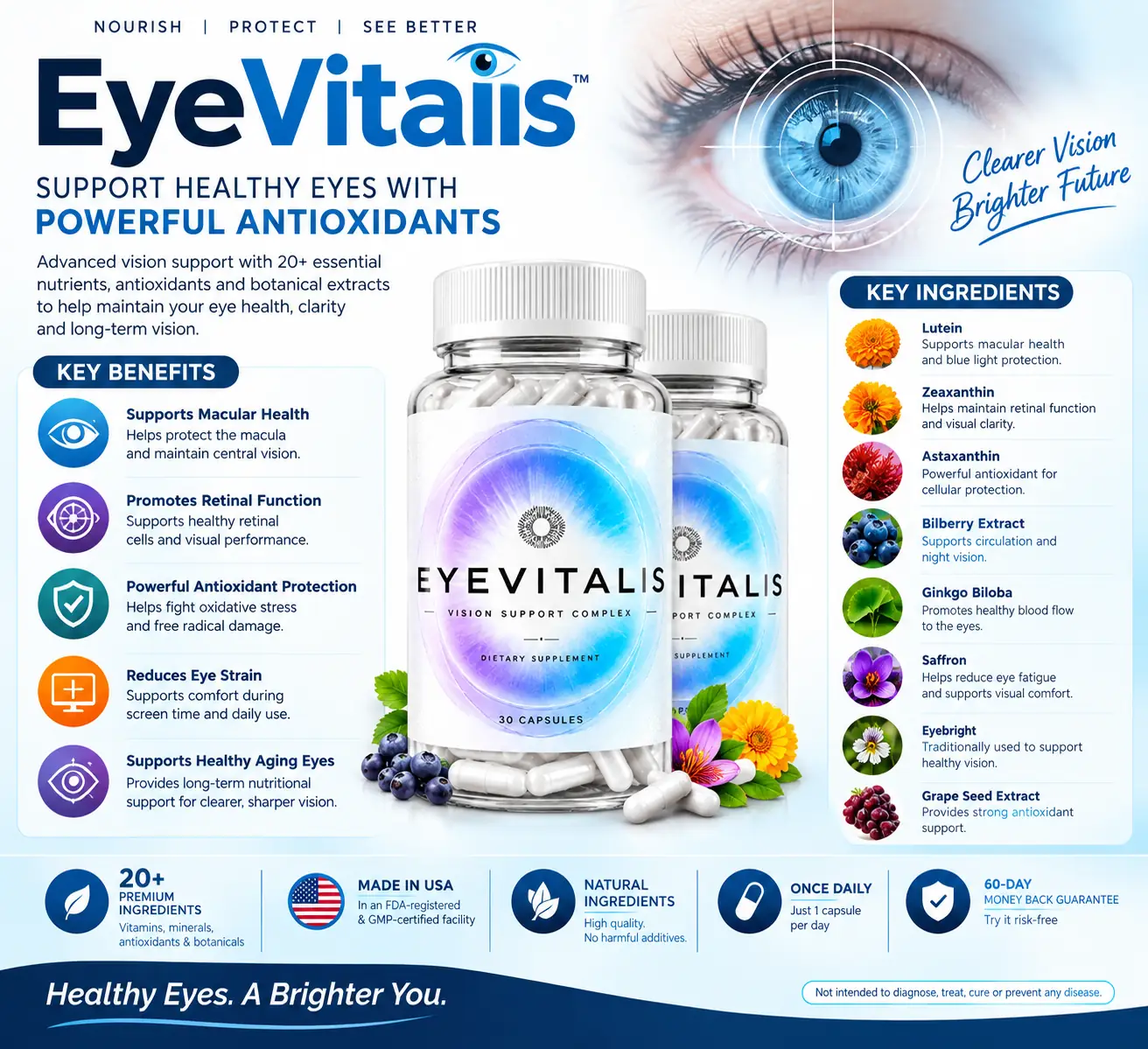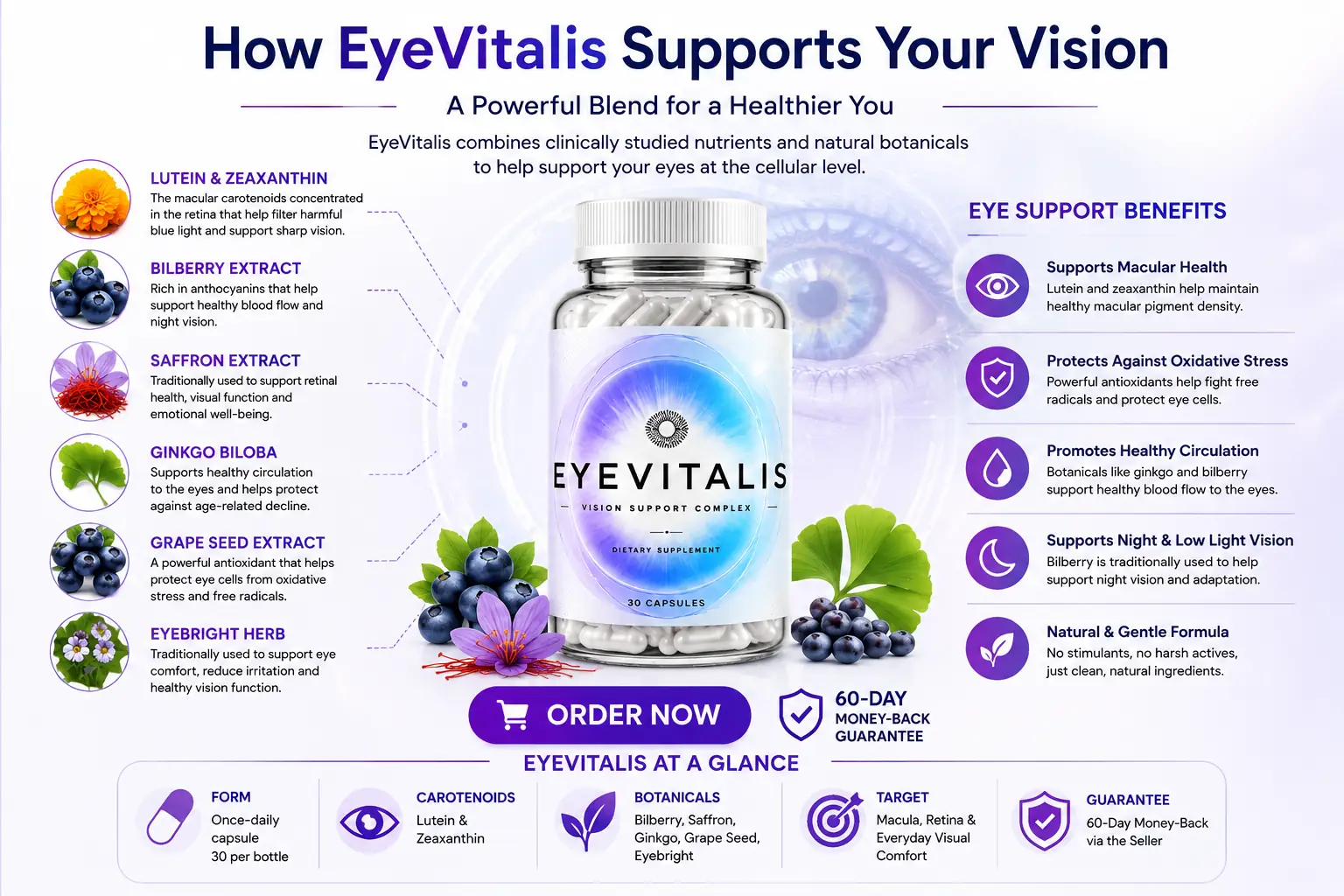
Lutein and zeaxanthin come up constantly in eye-health conversations, but it's worth understanding what these carotenoids actually are before deciding whether they belong in your routine. Here's a plain-language explainer.
What Are Lutein and Zeaxanthin?
Lutein and zeaxanthin are carotenoids — plant pigments related to beta-carotene — that the body cannot produce on its own. They must come from diet or supplementation, and they're notable for concentrating specifically in one part of the eye: the macula.
The Macula Connection
The macula is the small central area of the retina responsible for sharp, detailed central vision — the vision you use for reading, recognizing faces, and driving. Lutein and zeaxanthin are so concentrated there that together they're often called "macular pigment." Supporting healthy macular pigment density is the primary reason these two carotenoids anchor vision-support formulas like EyeVitalis.
Their Role With Blue Light
Lutein and zeaxanthin are commonly discussed for their role in filtering high-energy blue light before it reaches deeper, more sensitive eye tissue. This is particularly relevant given how much time many adults now spend on digital screens, which emit blue light throughout the day.
Food Sources
Dark leafy greens like spinach and kale are among the richest natural sources of lutein and zeaxanthin, along with corn, eggs, and orange peppers. A diet consistently rich in these foods is a foundational way to support macular carotenoid levels, independent of any supplement.
Why Some Adults Choose to Supplement
Getting consistent daily amounts of lutein and zeaxanthin through diet alone requires deliberate, repeated food choices that not everyone maintains. A supplement offers a consistent, measured daily amount without needing to plan meals around it — which is part of why these two carotenoids are the most common anchor ingredients in vision-support supplements.
How Much Is Generally Considered Adequate
Research on lutein and zeaxanthin intake varies by study design and population, and specific target amounts are best discussed with a healthcare provider rather than assumed from general articles. The largest reference point most people will encounter is the National Eye Institute's AREDS2 trial, which added these two carotenoids to the earlier AREDS formulation — though it studied one specific formulation at specific doses, not supplements generally. What's consistent across the research is the idea that regular, sustained intake — whether from diet or supplementation — matters more than any single high dose.
Setting Realistic Expectations
It's worth being direct: taking lutein and zeaxanthin does not reverse existing vision changes or replace an eye exam. These carotenoids build up gradually in eye tissue with consistent daily intake, and any supporting role they play unfolds over weeks to months, not days. Individual experiences vary, and no supplement can promise a specific visual outcome.
Ready to Try EyeVitalis?
A once-daily, transparent 6-ingredient capsule backed by a 60-day money-back guarantee.
Get EyeVitalis Now