Eye health tends to become a more active consideration somewhere after 45, often triggered by more screen fatigue or a comment at a routine exam. Here are seven daily habits worth prioritizing.
1. The 20-20-20 Rule
Every 20 minutes, look at something 20 feet away for at least 20 seconds. This simple habit reduces digital eye strain for anyone spending long stretches on a screen, and it's easy to build into a workday with a recurring reminder.
2. Stay Ahead of Hydration
Adequate hydration supports overall eye comfort, including tear film quality. A practical habit: keep water visible and accessible throughout the day rather than relying on remembering to drink when you're already feeling dry or fatigued.
3. Eat for Your Eyes
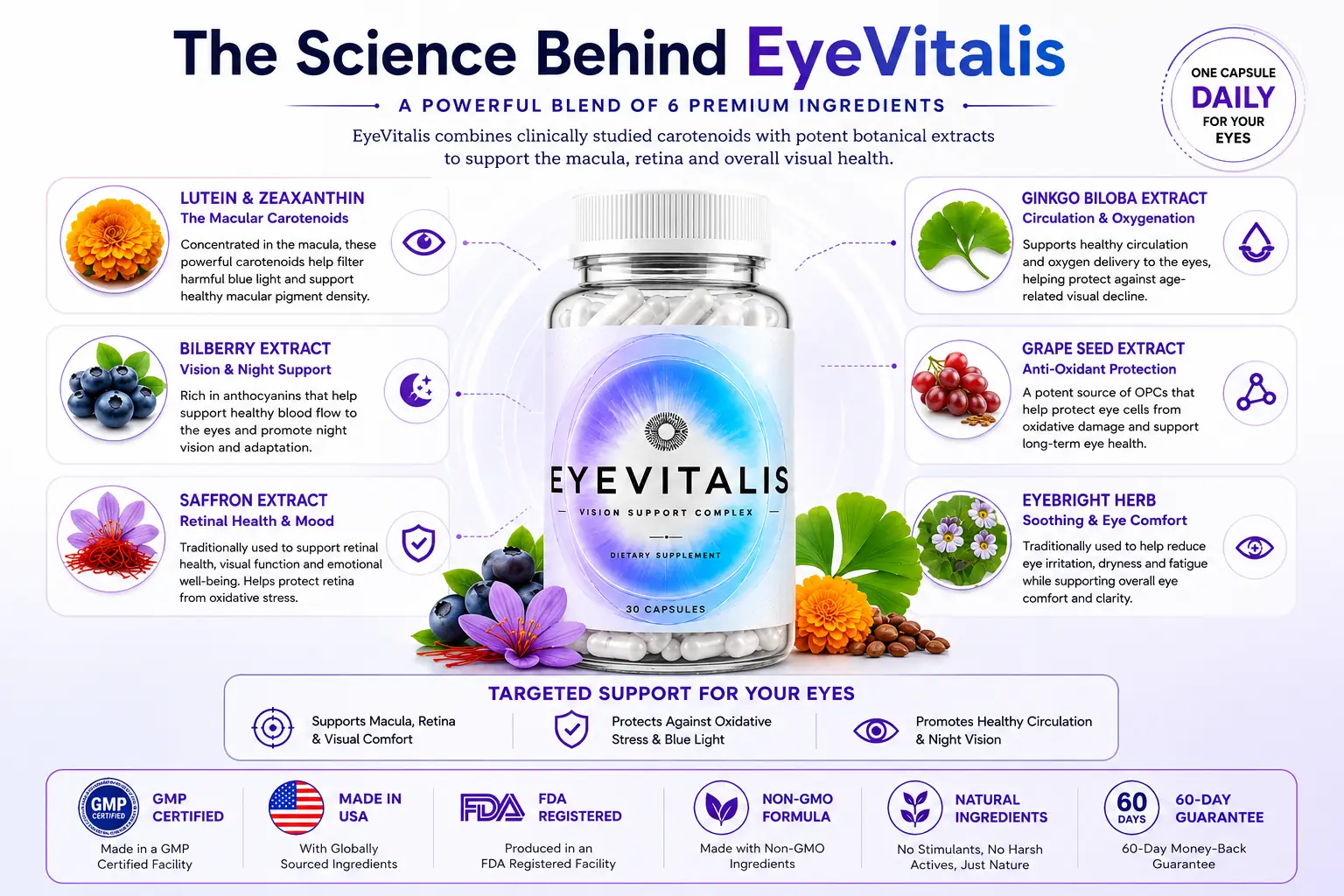
Leafy greens, colorful vegetables, and fatty fish are commonly associated with eye-supportive nutrients, including the same carotenoids — lutein and zeaxanthin — found in vision-support supplements. A diet rich in these foods supports the same nutritional pathways a supplement is designed to complement.
4. Adjust Your Screen Setup
Screen brightness, distance, and font size all affect how hard your eyes work during the day. Positioning a screen slightly below eye level and increasing text size can meaningfully reduce strain without any other change.
5. Prioritize Sleep
Sleep supports overall eye comfort and recovery. Poor sleep is commonly associated with increased eye strain and fatigue the following day, making a consistent sleep schedule one of the more overlooked eye-health habits.
6. Wear UV Protection
Sunglasses that block UV rays support long-term eye health by reducing cumulative sun exposure. This is a simple, consistent habit worth adopting any time you're outdoors for extended periods, not just on obviously sunny days.
7. Keep Up With Eye Exams
Regular eye exams are the single most important habit on this list. No supplement or lifestyle habit replaces professional evaluation, and many age-related changes are easiest to address when caught early. The National Eye Institute's Healthy Vision guidance covers dilated exams and how to find care, including low-cost options.
Attach New Habits to Old Ones
Habits are far more durable when attached to something you already do reliably. If you're at a desk most of the day, that's a natural anchor for the 20-20-20 rule — set a recurring reminder tied to your work schedule rather than trying to remember on your own.
Putting It All Together
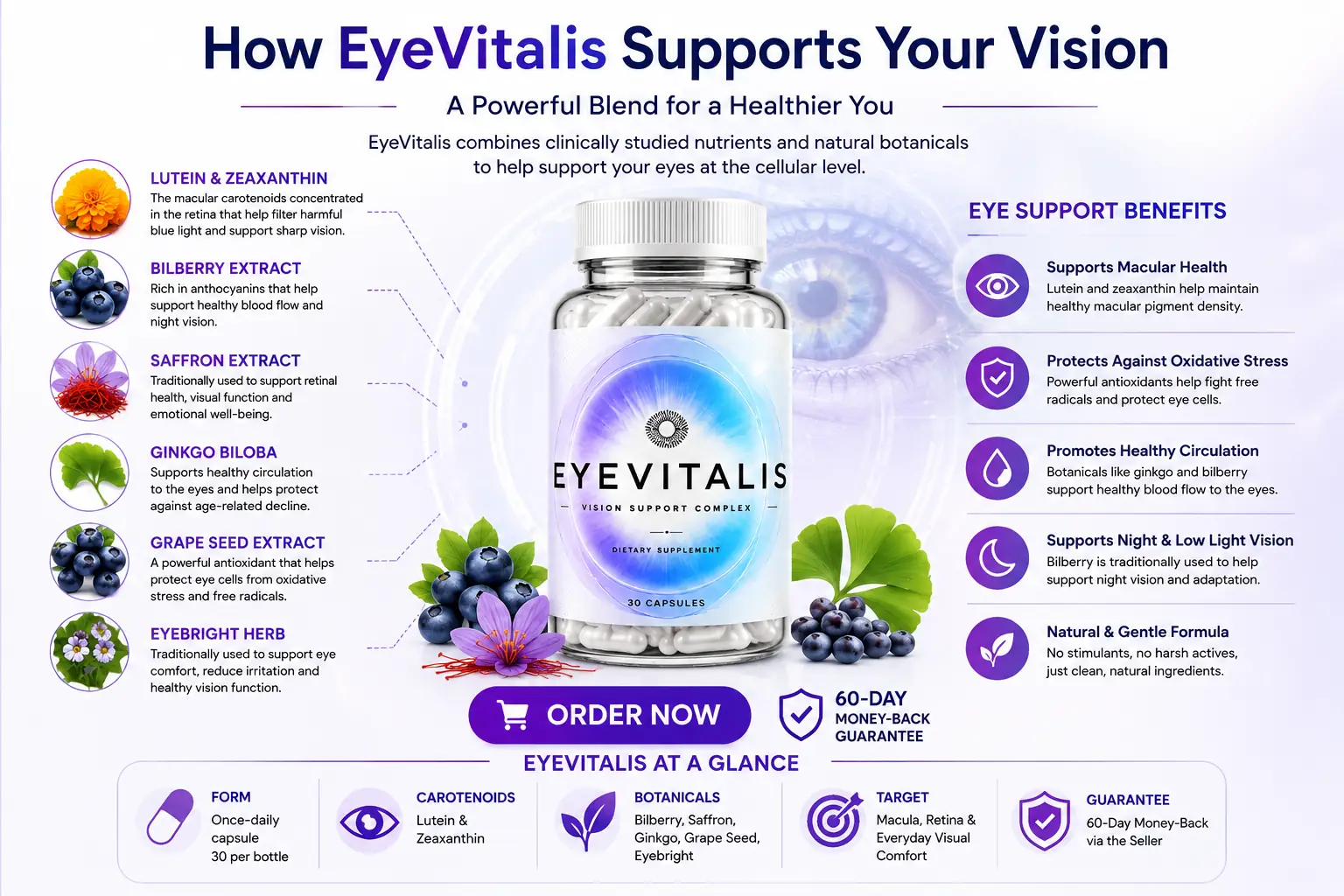
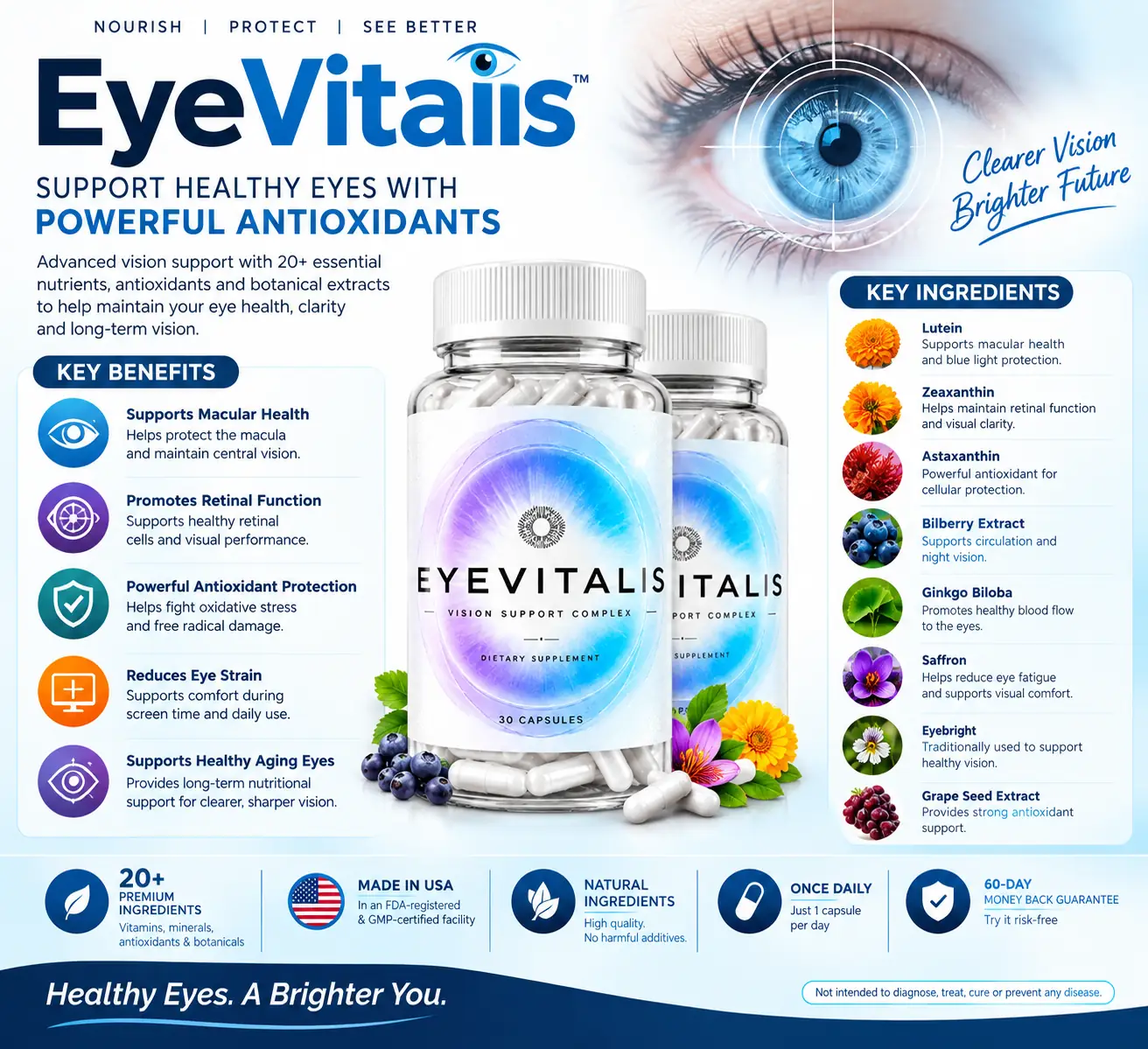
None of these habits require an overnight overhaul. Pick one or two to focus on first — the 20-20-20 rule and regular eye exams are a reasonable starting point — and build from there. A supplement like EyeVitalis can be one small, consistent piece of that broader routine, but it works alongside these habits, not instead of them.

Ready to Try EyeVitalis?
A once-daily, transparent 6-ingredient capsule backed by a 60-day money-back guarantee.
Get EyeVitalis Now